Introduction
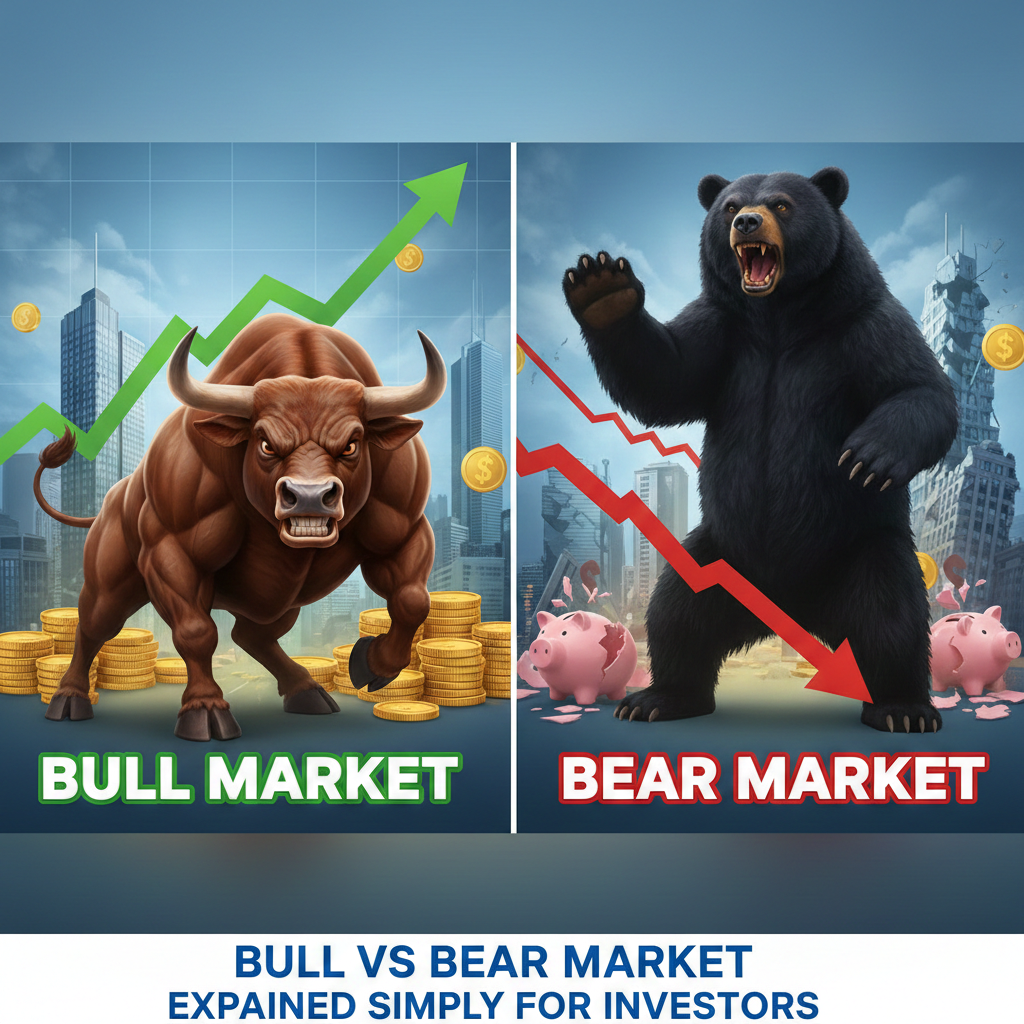
A Bull and Bear Markets bull market is a period of rising prices and growing optimism, while a bear market is marked by falling prices and widespread caution. Understanding both helps investors adjust behavior, not predict outcomes.
Most people hear the terms “bull market” and “bear market” only when emotions are already high. By then, fear or excitement often drives decisions. This guide explains bull and bear markets in plain language—what actually changes during each phase, what stays the same, and how long-term investors should think about them calmly instead of reacting to headlines.
What Is a Bull and Bear Market Bull and Bear Markets
A bull market isn’t just rising prices. It’s a period where confidence, participation, and expectations steadily increase.
Common Characteristics of a Bull Market
Prices trend upward over time
Optimism grows gradually
Risk-taking increases
Bad news is often ignored
From experience, bull markets feel comfortable—which is exactly why people take more risk than they realize.
[Expert Warning]
The biggest mistakes in bull markets usually happen when things feel safest.
What Defines a Bear Market in Practice
A bear market is not just “prices going down.” It’s a shift in psychology.
How Bear Markets Feel
Headlines turn pessimistic
Volatility increases
Confidence drops quickly
Investors question long-term plans
Bear markets often feel endless while they’re happening, even though history shows they eventually pass.
[Pro-Tip]
Fear during bear markets often peaks after most of the damage is already done.
Table — Bull vs Bear Market at a Glance
| Aspect | Bull Market | Bear Market |
| Price direction | Rising | Falling |
| Investor mood | Optimistic | Cautious or fearful |
| Media tone | Positive | Negative |
| Risk appetite | High | Low |
| Common mistake | Overconfidence | Panic selling |
This contrast explains why behavior—not timing—determines outcomes.
Real-World Scenario — Same Investor, Two Market Phases
An investor experiences:
A bull market where returns feel easy
A bear market where losses test patience
In the bull phase, they add risk. In the bear phase, they consider quitting. Years later, the decisions made during fear matter more than gains made during optimism.
The market phase didn’t define success—reaction did.
Common Misunderstandings About Bull and Bear Markets
“Bull Markets Are Safe”
Reality: Risk builds quietly during long bull runs.
“Bear Markets Mean Failure”
Reality: Bear markets are normal parts of market cycles.
“You Must Act Quickly”
Reality: Most investors harm results by rushing.
[Money-Saving Recommendation]
Avoid increasing risk simply because prices have been rising. Comfort is not the same as safety.
Information Gain — The Emotional Asymmetry Most Articles Miss
Most SERP content treats bull and bear markets symmetrically. In reality, emotions behave asymmetrically:
Greed builds slowly
Fear spikes suddenly
From experience, this asymmetry explains why people buy late and sell early. Understanding this emotional imbalance matters more than memorizing definitions.
Beginner Mistake Most People Make
Beginners often believe they should change strategies between bull and bear markets. In reality, most long-term plans are designed to survive both.
Constant strategy switching often creates more damage than the market itself.
How Investors Should Behave in Each Market
A practical mindset:
In bull markets: stay disciplined, don’t overextend
In bear markets: stay consistent, don’t abandon plans
In both: review goals, not headlines
(Natural transition: Investors who understand market phases often explore broader market-insight tools to gain context without reacting emotionally.)
FAQs
Q1: How long do bull markets last?
They vary widely and can last years.
Q2: Are bear markets predictable?
No. They’re usually clear only in hindsight.
Q3: Should beginners stop investing in bear markets?
Usually no, if goals are long-term.
Q4: Can a bull market turn into a bear market quickly?
Yes. Sentiment can change faster than fundamentals.
Q5: Do bull markets guarantee profits?
No. Timing and behavior still matter.
Conclusion
Bull and bear markets are not signals to panic or celebrate—they are natural phases of investing. The real challenge isn’t identifying the phase, but responding appropriately. Investors who remain disciplined during optimism and calm during fear are far more likely to succeed over time. Understanding these cycles simply helps you stay grounded when emotions run high.
Internal link
https://finzenta.com/wp/2026/01/07/market-trends-investment-impact/
External link
https://www.investopedia.com/terms/b/bullmarket.asp