Introduction
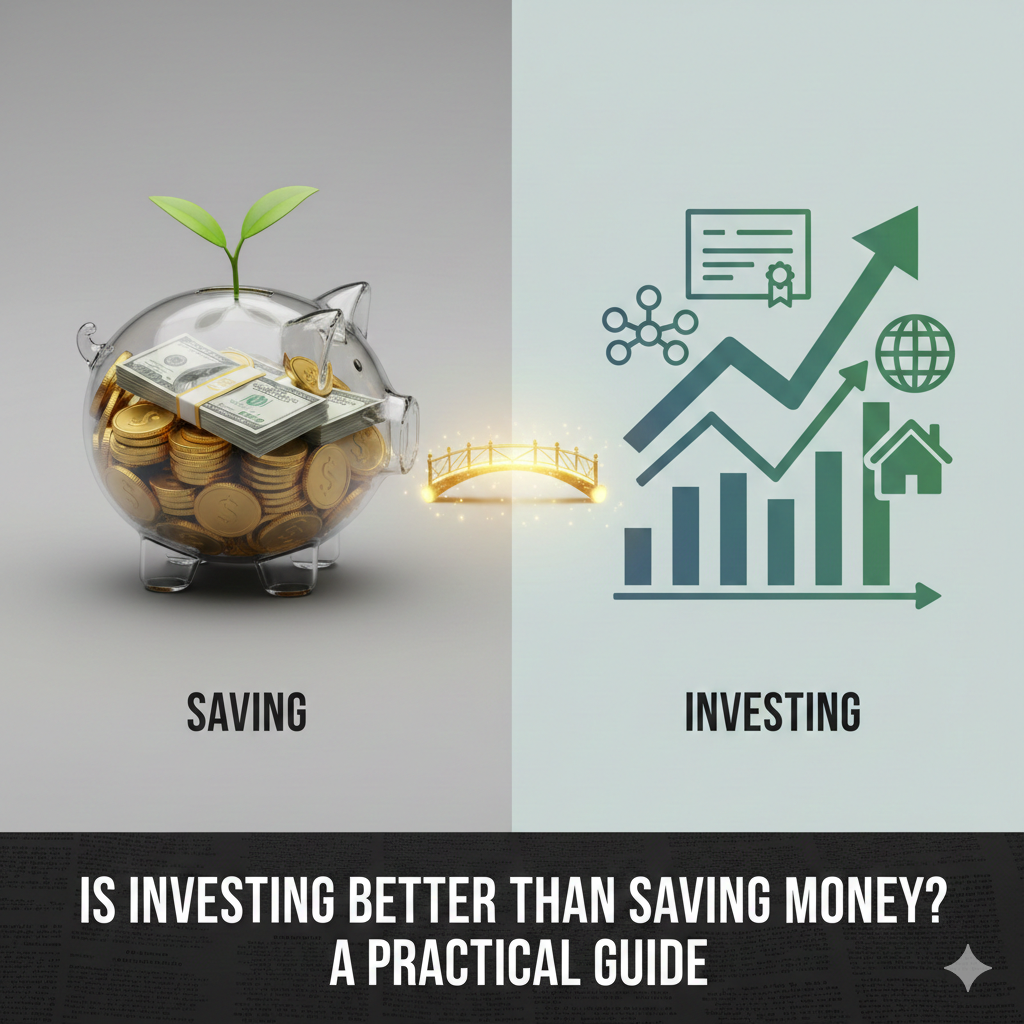
Investing is generally better than saving for long-term goals because it offers growth that can outpace inflation, while saving is better for short-term needs and financial safety. The right choice depends on time horizon, risk tolerance, and purpose.
Investing vs Saving is one of the first questions beginners ask when starting their financial journey. Choosing between putting money in a savings account or investing it for long-term growth can feel confusing, but understanding the purpose of each option makes decisions much easier. While investing offers the potential for higher growth over time, saving provides stability and access to funds when you need them. This article explains when investing is better than saving, when saving makes more sense, and how beginners can balance both strategies effectively.
This question comes up early for almost everyone starting their financial journey. Friends say “invest or you’ll fall behind,” while others warn that investing is risky and savings feel safer. The truth is more balanced. This article explains when investing is better than saving money, when saving still makes more sense, and how beginners can use both without feeling conflicted or rushed into decisions they don’t fully understand.
What Saving Money Is Really Designed For Investing vs Saving
Saving is about stability, not growth. Savings accounts are meant to protect money you’ll need soon, not multiply it.
The Core Benefits of Saving
Immediate access to funds
Low or no risk of loss
Mental comfort and liquidity
From real experience, savings provide peace of mind that investments simply can’t replace.
[Expert Warning]
Using investments as emergency money often leads to forced selling at the worst possible time.
What Investing Is Designed to Do
Investing aims to grow money over longer periods by accepting controlled uncertainty.
Why Investing Exists at All
Investments compensate you for:
Time commitment
Market volatility
Delayed gratification
Unlike saving, investing is not about certainty—it’s about probability.
[Pro-Tip]
If your money doesn’t need to be touched for years, investing usually makes more sense than saving.
Table — Saving vs Investing Side-by-Side
| Factor | Saving Money | Investing |
| Time horizon | Short-term | Long-term |
| Risk level | Very low | Variable |
| Inflation protection | Weak | Stronger |
| Accessibility | Immediate | Limited |
| Emotional comfort | High | Moderate |
| Growth potential | Low | Higher |
This comparison shows why the debate isn’t “either/or,” but when and why.
Real-World Scenario — Same Income, Different Choices
Two people earn similar incomes:
Person A saves everything for 10 years
Person B saves for emergencies, invests the res
After a decade, Person A feels safe but stagnant. Person B has experienced volatility but built meaningful growth.
The difference wasn’t discipline—it was purpose allocation.
Common Misunderstandings Beginners Have
Saving Is Wasting Time
Reality: Saving protects your ability to invest calmly.
“Investing Is Too Risky for Me”
Reality: Avoiding all investing carries inflation risk.
“I Must Choose One Forever”
Reality: Most people use both simultaneously.
[Money-Saving Recommendation]
Build an emergency fund first. It prevents emotional investing mistakes later.
Information Gain — The Risk of Over-Saving Nobody Talks About
Most SERP articles warn about investment risk but ignore opportunity risk.
From experience, people who over-save often delay investing for years because savings feel “never enough.” Inflation quietly erodes purchasing power, and catching up later becomes harder.
This silent risk rarely feels urgent—but it compounds negatively over time.
Beginner Mistake Most People Make
The biggest mistake is trying to invest before feeling financially secure.
When money feels tight, every market dip feels threatening. Saving first creates psychological safety that allows better long-term investing decisions.
How Beginners Should Balance Saving and Investing
A practical framework:
Build emergency savings
Cover short-term goals with savings
Invest for long-term growth
Adjust as income grows
This balance evolves over time—it’s not fixed.
(Natural transition: Many beginners who reach this balance start using financial calculators and planning tools to decide how much to allocate between saving and investing.)
FAQs
Q1: Is investing always better than saving?
No. Investing suits long-term goals; saving suits short-term needs.
Q2: Should beginners invest before saving?
Usually no. Emergency savings come first.
Q3: Is saving money useless because of inflation?
No. Savings provide stability, even if growth is limited.
Q4: Can I save and invest at the same time?
Yes. Most people should.
Q5: How much should I save before investing?
Enough to cover emergencies and near-term expenses.
Conclusion
Investing is often better than saving money for long-term growth—but saving is essential for short-term security and emotional stability. The smartest approach isn’t choosing one over the other, but understanding the role each plays. When savings protect your foundation and investments build your future, financial decisions become calmer, clearer, and more sustainable.
Internal link
https://finzenta.com/wp/2026/01/07/investing-vs-saving/
External link
https://www.investor.gov/introduction-investing