Introduction
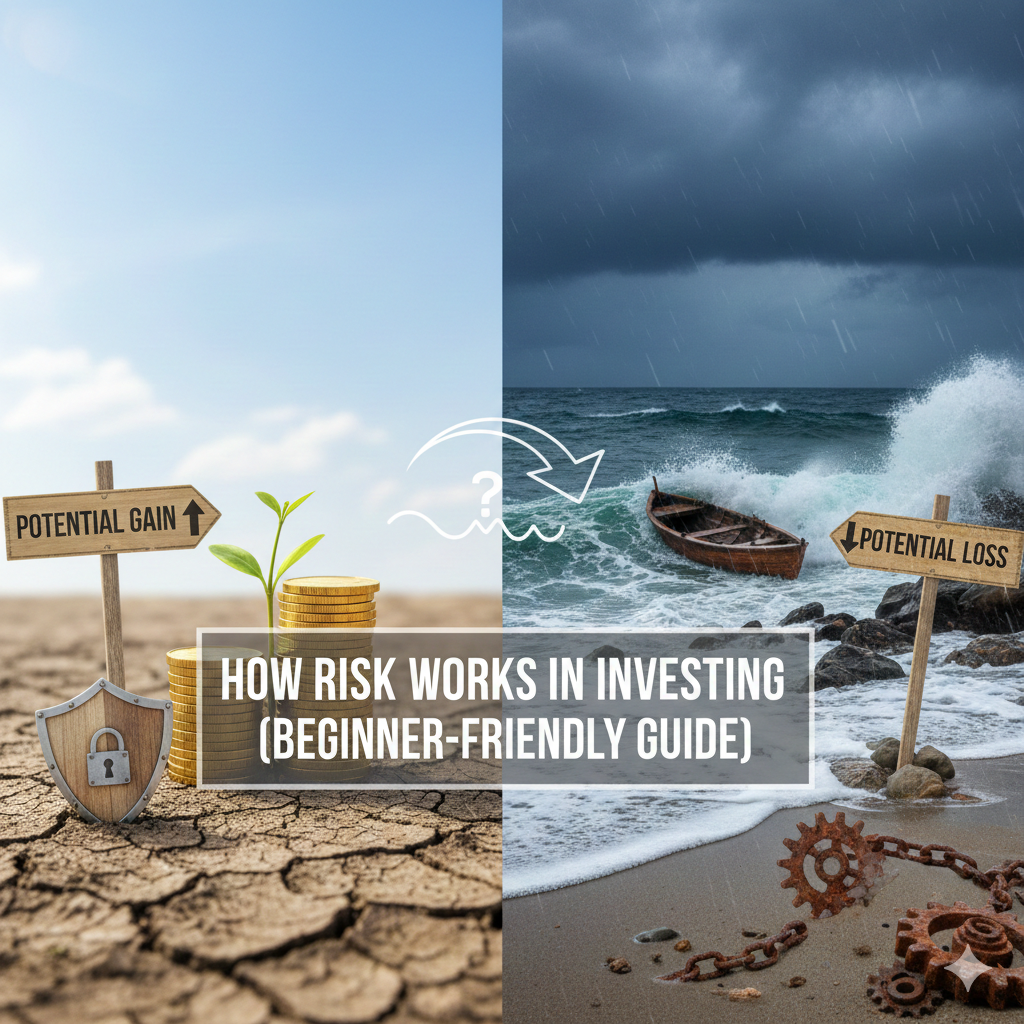
Risk in investing is the chance that actual outcomes differ from expectations, including losses, volatility, and uncertainty over time. Understanding risk is less about avoiding it and more about managing how much uncertainty you can realistically tolerate.
What Investment Risk for Beginners Really Means
Investment Risk for Beginners is the chance that actual outcomes differ from expectations, including losses, volatility, and uncertainty over time. Understanding investment risk isn’t about avoiding it—it’s about managing how much uncertainty you can realistically tolerate.
Investment Risk vs Loss — Understanding the Difference
Investment Risk for Beginners is the chance that actual outcomes differ from expectations, including losses, volatility, and uncertainty over time. Understanding investment risk isn’t about avoiding it—it’s about managing how much uncertainty you can realistically tolerate.
Instead of starting with “Risk in investing…”, rewrite the first sentence like this:
Many beginners think risk means “losing money,” so they either avoid investing altogether or take reckless chances hoping for fast gains. In reality, risk is more nuanced. This article explains how risk actually works in investing, why some risks are unavoidable, and how beginners can approach risk in a practical, level-headed way without fear or false confidence.
What Risk Really Means in Investing
Risk is not a single event. It’s a range of possible outcomes that deviate from what you expect.
From real investing experience, the biggest surprise for beginners is that risk exists even when nothing seems to be happening. Inflation, missed opportunities, and poor diversification are quiet risks that don’t feel dramatic—but matter deeply over time.
Risk vs Loss (Not the Same Thing)
Risk: Uncertainty in outcomes
Loss: A negative outcome
You can experience risk without losses—and losses without long-term damage if risk is managed properly.
[Expert Warning]
Avoiding all risk often creates a different risk: falling behind inflation and long-term goals.
The Main Types of Risk Beginners Should Understand
Market Risk
The natural ups and downs of markets. This is unavoidable if you invest in growth assets.
Inflation Risk
Money losing purchasing power over time. Often ignored, but very real.
Concentration Risk
Putting too much money into one asset or idea.
Behavioral Risk
Emotional decisions made during fear or excitement.
From practical situations, behavioral risk causes more damage than market risk for beginners.
Table — Common Risks and How Beginners Misjudge Them
Risk Type How Beginners See It What Actually Matters
Market risk Sudden loss Long-term variability
Inflation risk Invisible Gradual wealth erosion
Concentration risk Confidence Fragility
Behavioral risk Ignored Biggest real danger
Understanding this table helps reset expectations early.
Why Risk Feels Worse Than It Is
Short-Term Noise vs Long-Term Reality
Markets fluctuate daily, but long-term trends matter more. Beginners often react to noise because it feels urgent.
[Pro-Tip]
If a price movement wouldn’t matter five years from now, it probably doesn’t deserve action today.
Real-World Scenario — Same Risk, Different Reactions
Two investors experience the same market decline:
Investor A understands volatility and stays invested
Investor B panics and exits
Years later, Investor A benefits from recovery. Investor B avoids investing altogether.
The risk was identical. The reaction changed the outcome.
Common Beginner Mistakes With Risk (And Fixes)
Avoiding Risk Completely
Fix: Accept controlled risk aligned with long-term goals.
Taking Too Much Risk Early
Fix: Increase risk gradually as understanding improves.
Copying High-Risk Strategies
Fix: Match risk to your own income, timeline, and temperament.
[Money-Saving Recommendation]
Never increase risk just to “catch up” to a goal faster. That shortcut usually costs more than it saves.
Information Gain — The Risk Nobody Talks About
Most SERP articles talk about market risk but ignore identity risk.
From experience, beginners struggle when they don’t know why they’re investing:
Growth
Income
Learning
Without clarity, risk decisions become inconsistent. Defining your purpose reduces risk more than any diversification formula.
This insight is rarely covered but critical.
Practical Insight From Experience
What beginners often overlook is that risk tolerance changes over time. Early discomfort doesn’t mean investing isn’t for you—it means your experience is still developing.
The mistake is reacting permanently to temporary discomfort.
How to Approach Risk as a Beginner
Start with diversified exposure
Accept volatility as normal
Limit how often you check results
Increase risk slowly with confidence
(Natural transition: Many beginners who want clarity around risk turn to long-term investing guides and comparison tools to align strategy with comfort level.)
FAQs
Q1: Is risk the same as losing money?
No. Risk is uncertainty; losses are outcomes.
Q2: Can investing be risk-free?
No. Even avoiding investing carries inflation risk.
Q3: How much risk should beginners take?
Only as much as they can tolerate without panic.
Q4: Is volatility bad for long-term investors?
Not necessarily—it’s normal and expected.
Q5: Does diversification remove risk?
It reduces specific risks, not all uncertainty.
Conclusion
Risk is not the enemy of investing—misunderstanding it is. When beginners learn to view risk as manageable uncertainty rather than danger, investing becomes calmer and more sustainable. The goal isn’t to eliminate risk, but to align it with your goals, timeline, and emotional comfort. With the right mindset, risk becomes a tool instead of a threat.
Internal link
https://finzenta.com/wp/2026/01/07/beginner-investing-mistakes-focuskeywor/
Eternal link
https://www.cfainstitute.org/insights/articles/understanding-investment-risk