Introduction
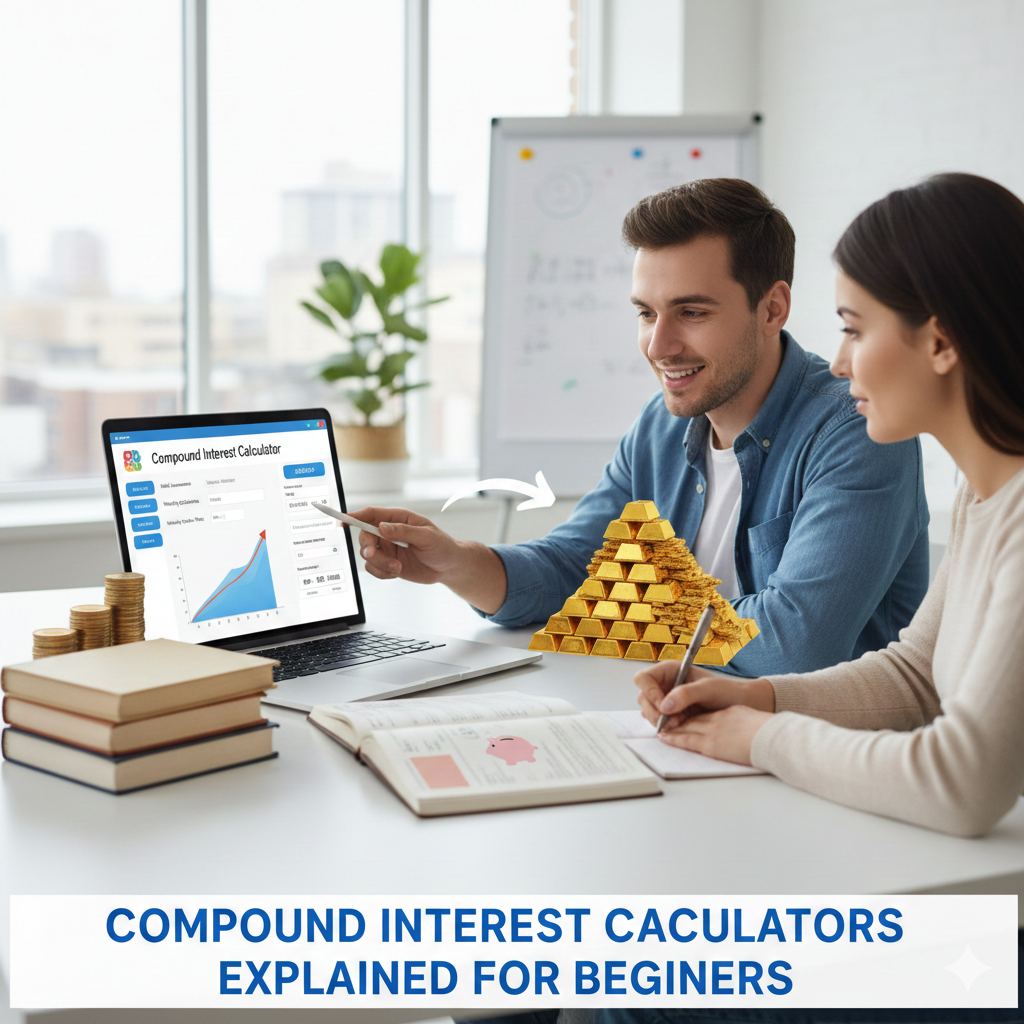
Compound interest calculators for beginners show how money can grow over time when returns are reinvested consistently. These tools are meant for planning and understanding long-term direction—not for predicting guaranteed outcomes.
Compound interest is often described as “magic,” but that framing can mislead new investors. While calculators are powerful for visualizing growth and motivation, they can create unrealistic expectations when assumptions are misunderstood. The numbers look precise, but they only reflect what you enter.
This guide explains compound interest calculators for beginners in a practical way—how they actually work, which assumptions matter most, where beginners commonly go wrong, and how to use these calculators to stay motivated without relying on false certainty.
What a Compound Interest Calculator Actually Calculates
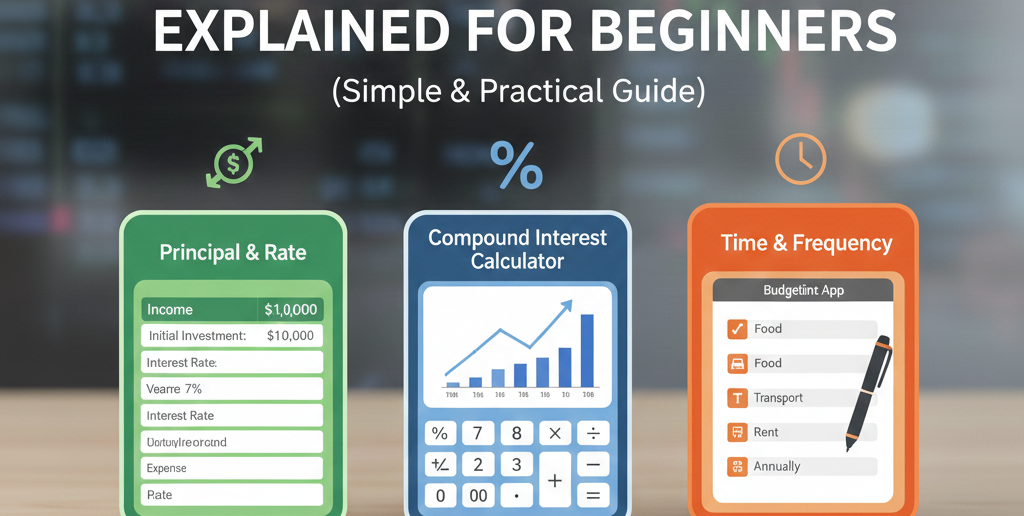
At its core, a compound interest calculator models growth over time using a few key inputs.
The Main Inputs That Drive Results
Starting amount
Regular contributions
Assumed return rate
Compounding frequency
Time horizon
From real usage, the return rate and time horizon influence outcomes far more than most beginners expect.
[Expert Warning]
A calculator does not know future returns. It only reflects the assumptions you enter.
Why Small Changes Create Big Differences
The Power—and Danger—of Assumptions
Changing the assumed return by even a small amount can dramatically alter the final number shown.
This is why two people using different calculators—or the same calculator with slightly different inputs—can see wildly different outcomes.
Table — Assumptions That Matter Most
| Assumption | Why It Matters |
| Return rate | Drives exponential growth |
| Time horizon | Multiplies compounding effect |
| Contribution timing | Affects total growth window |
| Inflation ignored | Overstates real results |
This table helps beginners focus on the inputs that truly shape projections.
What Compound Interest Calculators Do Well
Motivation Through Visualization
Seeing long-term growth encourages consistency, especially for beginners who feel progress is slow early on.
Comparing Scenarios
Calculators are excellent for “what if” thinking—adjusting contributions, timelines, or expectations.
[Pro-Tip]
Use calculators to compare your own scenarios, not to chase the highest possible number.
What Compound Interest Calculators Don’t Tell You
They usually do not account for:
Market volatility
Behavioral mistakes
Inflation (unless manually adjusted)
Missed contributions
From experience, these missing elements explain why real outcomes often differ from projections.
Real-World Scenario — Motivation vs Misinterpretation
Two beginners use the same calculator:
Beginner A treats the result as a promise
Beginner B treats it as a direction
When markets fluctuate, Beginner A feels disappointed. Beginner B stays motivated and adjusts expectations calmly.
The tool was identical. The interpretation made the difference.
Common Beginner Mistakes With Compound Interest Calculators
Using Optimistic Return Rates
Fix: Use conservative assumptions.
Ignoring Inflation
Fix: Mentally reduce projected results.
Checking Projections Too Often
Fix: Revisit projections annually, not monthly.
[Money-Saving Recommendation]
Avoid paid calculator tools early on. Simple, transparent calculators work just as well.
Information Gain — Why Calculators Feel More Certain Than Reality
Most SERP articles praise calculators without addressing certainty bias.
From experience, numbers displayed cleanly feel more reliable than uncertain reality. This psychological effect causes beginners to trust projections too deeply. Understanding that bias helps you use calculators as guides—not guarantees.
This insight is rarely discussed clearly.
Beginner Mistake Most People Make
Beginners often believe the calculator’s final number is the goal. In reality, the goal is the habit that gets you there, not the number itself.
How Beginners Should Use Compound Interest Calculators
A healthy approach:
Use conservative assumptions
Focus on contribution consistency
Compare scenarios, not outcomes
Treat results as motivation—not promises
(Natural transition: Beginners who use calculators well often pair them with budgeting and tracking tools to turn projections into sustainable action.)
FAQs
Q1: Are compound interest calculators accurate?
They’re accurate mathematically, but depend on assumptions.
Q2: Should beginners trust calculator results?
They should trust the direction, not the exact number.
Q3: How often should I use a compound interest calculator?
Once a year is usually enough.
Q4: Do calculators account for inflation?
Most don’t unless you adjust returns manually.
Q5: Can calculators predict investment success?
No. They help with planning, not prediction.
Conclusion
Compound interest calculators are powerful learning and motivation tools—but only when used with realism. They show what could happen under certain assumptions, not what will happen. Beginners who understand this distinction avoid disappointment and stay focused on habits that matter most: consistency, patience, and time. Used wisely, these calculators support progress instead of creating pressure.
Internal Link
Financial Planning Tools for Beginners: A Simple Practical Guide
External Link
Budgeting
behavioral-finance-the-second-generation.pdf