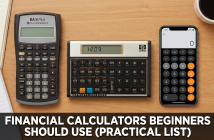
Introduction
The best financial tools for beginners are those that simplify decisions, encourage consistency, and reduce mistakes—not tools with the most features. Simplicity and clarity matter far more than complexity early on.
When beginners search for financial tools, they often end up overwhelmed. Budget apps, investment trackers, calculators, dashboards—everything promises control and growth. But in practice, too many tools often create confusion instead of clarity. This article explains which financial tools genuinely help beginners, how to choose tools based on real needs, and why using fewer tools often leads to better financial outcomes.
What Beginners Actually Need From Financial Tools
Financial tools should support behavior, not replace thinking.
From real experience, beginners benefit most from tools that:
Make decisions simpler
Reduce emotional reactions
Encourage regular habits
Tools that require constant tweaking or interpretation usually backfire early on.
The Simplicity Advantage
Simple tools lower the chance of errors and increase follow-through.
[Expert Warning]
A tool you don’t understand fully is more dangerous than no tool at all.
Core Categories of Financial Tools for Beginners
Budgeting & Cash-Flow Tools
These tools help you see where money goes and whether investing is realistically affordable.
Basic Investment Calculators
Calculators help visualize long-term outcomes without forcing predictions.
Portfolio Tracking Tools
Tracking tools are useful—but only if used occasionally, not obsessively.
From practical situations, most beginners only need one tool from each category, not dozens.
Table — Financial Tools That Help vs Tools That Hurt Beginners
| Tool Type | When It Helps | When It Hurts |
| Budget tracker | Building awareness | Micromanaging every expense |
| Investment calculator | Long-term planning | Chasing projections |
| Portfolio tracker | Periodic review | Daily checking |
| Advanced analytics | Later stages | Early confusion |
Real-World Scenario — Tool Overload vs Tool Discipline
Two beginners start investing:
Beginner A installs five apps, checks dashboards daily, and constantly adjusts
Beginner B uses one budgeting tool and one calculator, reviewing monthly
After a year, Beginner B feels confident and consistent. Beginner A feels anxious and unsure.
The difference wasn’t information—it was tool discipline.
Common Mistakes Beginners Make With Financial Tools
Collecting Tools Instead of Building Habits
Fix: Choose tools that reinforce one clear habit at a time.
Trusting Tools Blindly
Fix: Understand assumptions behind calculators and projections.
Using Tools Too Frequently
Fix: Set review schedules instead of reacting daily.
[Money-Saving Recommendation]
Avoid paid tools early on. Free, simple tools are usually more than enough for beginners.
Information Gain — Why Fewer Tools Often Lead to Better Results
Most SERP articles rank tools by features. What they miss is cognitive load.
From experience, every additional tool increases mental friction. Beginners who limit tools reduce decision fatigue and stick to plans longer. Progress comes from repetition, not constant optimization.
This behavioral angle is rarely discussed but critical.
Beginner Mistake Most People Make
Beginners often assume better tools equal better outcomes. In reality, better decisions come from clarity, not dashboards.
A simple spreadsheet you understand can outperform a powerful app you don’t.
How Beginners Should Choose Financial Tools
A practical checklist:
Does this tool solve one clear problem?
Can I explain how it works?
Will it reduce stress, not increase it?
Can I review it monthly, not daily?
If the answer is no, skip it.
(Natural transition: Many beginners who simplify their tools later explore specialized financial calculators and planning resources as their confidence grows.)
FAQs
Q1: Do beginners really need financial tools?
Yes, but only a few simple ones.
Q2: Are paid financial tools better than free ones?
Not usually for beginners.
Q3: How many tools should a beginner use?
Typically two to three at most.
Q4: Can tools replace financial knowledge?
No. Tools support decisions, they don’t make them.
Q5: When should beginners upgrade tools?
After habits and understanding are established.
Conclusion
The best financial tools for beginners are not the most advanced—they’re the most usable. Tools should reduce stress, not create it. By choosing simple tools that support budgeting, planning, and occasional review, beginners build confidence and consistency. Over time, tools can evolve, but clarity should always come first.
Internal Link
Free Investment Calculators: How to Use Them Without Overconfidence 2026
External Links
behavioral-finance-the-second-generation.pdf
Budgeting