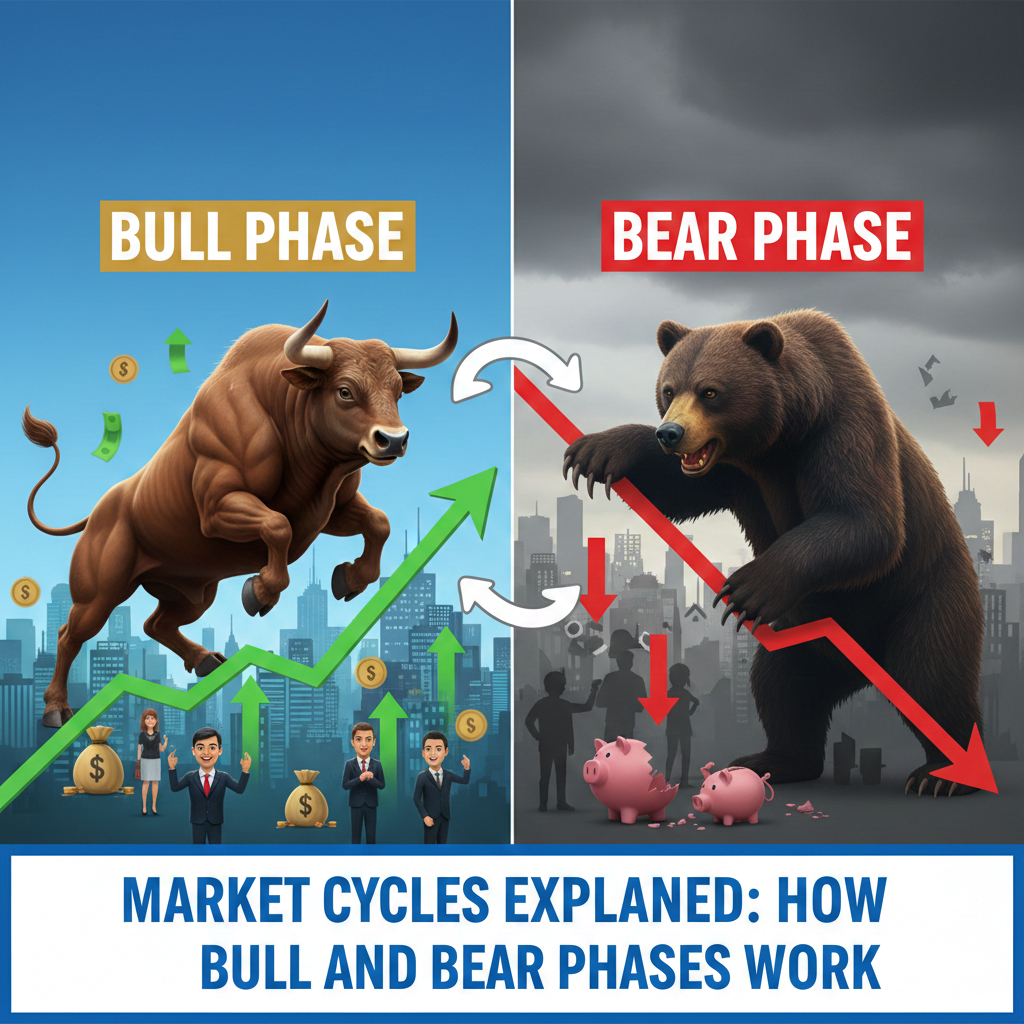
Introduction
Market cycles describe the repeating phases of growth and decline that financial markets move through over time. These cycles are driven by economic conditions, investor psychology, liquidity, and risk appetite rather than linear progress.
Market cycles
describe the repeating phases of growth and decline that financial markets naturally move through over time. These cycles are influenced by economic conditions, investor psychology, liquidity, and risk appetite—not just by random chance.
Many investors assume markets move unpredictably. In reality, market cycles follow recognizable patterns: prices rise, optimism grows, excess builds, confidence breaks, fear spreads, and recovery eventually begins.
This article explains market cycles, including how bull and bear phases develop, why emotions play a central role, and how investors can respond intelligently at different stages—without attempting to predict exact tops or bottoms.
Market cycles describe the repeating phases of growth and decline that financial markets naturally move through over time. These cycles are influenced by economic conditions, investor psychology, liquidity, and risk appetite—not just by random chance.
Many investors assume markets move unpredictably. In reality, market cycles follow recognizable patterns: prices rise, optimism grows, excess builds, confidence breaks, fear spreads, and recovery eventually begins.
This article explains market cycles, including how bull and bear phases develop, why emotions play a central role, and how investors can respond intelligently at different stages—without attempting to predict exact tops or bottoms.
Market cycles describe the repeating phases of growth and decline that financial markets naturally move through over time. These cycles are influenced by economic conditions, investor psychology, liquidity, and risk appetite—not just by random chance.
Many investors assume markets move unpredictably. In reality, market cycles follow recognizable patterns: prices rise, optimism grows, excess builds, confidence breaks, fear spreads, and recovery eventually begins.
This article explains market cycles, including how bull and bear phases develop, why emotions play a central role, and how investors can respond intelligently at different stages—without attempting to predict exact tops or bottoms.
Market cycles describe the repeating phases of growth and decline that financial markets naturally move through over time. These cycles are influenced by economic conditions, investor psychology, liquidity, and risk appetite—not just by random chance.
Many investors assume markets move unpredictably. In reality, market cycles follow recognizable patterns: prices rise, optimism grows, excess builds, confidence breaks, fear spreads, and recovery eventually begins.
This article explains market cycles, including how bull and bear phases develop, why emotions play a central role, and how investors can respond intelligently at different stages—without attempting to predict exact tops or bottoms.
Market cycles describe the repeating phases of growth and decline that financial markets naturally move through over time. These cycles are influenced by economic conditions, investor psychology, liquidity, and risk appetite—not just by random chance.
Many investors assume markets move unpredictably. In reality, market cycles follow recognizable patterns: prices rise, optimism grows, excess builds, confidence breaks, fear spreads, and recovery eventually begins.
This article explains market cycles, including how bull and bear phases develop, why emotions play a central role, and how investors can respond intelligently at different stages—without attempting to predict exact tops or bottoms.
Market cycles describe the repeating phases of growth and decline that financial markets naturally move through over time. These cycles are influenced by economic conditions, investor psychology, liquidity, and risk appetite—not just by random chance.
Many investors assume markets move unpredictably. In reality, market cycles follow recognizable patterns: prices rise, optimism grows, excess builds, confidence breaks, fear spreads, and recovery eventually begins.
This article explains market cycles, including how bull and bear phases develop, why emotions play a central role, and how investors can respond intelligently at different stages—without attempting to predict exact tops or bottoms.
Market cycles describe the repeating phases of growth and decline that financial markets naturally move through over time. These cycles are influenced by economic conditions, investor psychology, liquidity, and risk appetite—not just by random chance.
Many investors assume markets move unpredictably. In reality, market cycles follow recognizable patterns: prices rise, optimism grows, excess builds, confidence breaks, fear spreads, and recovery eventually begins.
This article explains market cycles, including how bull and bear phases develop, why emotions play a central role, and how investors can respond intelligently at different stages—without attempting to predict exact tops or bottoms.
Market cycles describe the repeating phases of growth and decline that financial markets naturally move through over time. These cycles are influenced by economic conditions, investor psychology, liquidity, and risk appetite—not just by random chance.
Many investors assume markets move unpredictably. In reality, market cycles follow recognizable patterns: prices rise, optimism grows, excess builds, confidence breaks, fear spreads, and recovery eventually begins.
This article explains market cycles, including how bull and bear phases develop, why emotions play a central role, and how investors can respond intelligently at different stages—without attempting to predict exact tops or bottoms.
Market cycles describe the repeating phases of growth and decline that financial markets naturally move through over time. These cycles are influenced by economic conditions, investor psychology, liquidity, and risk appetite—not just by random chance.
Many investors assume markets move unpredictably. In reality, market cycles follow recognizable patterns: prices rise, optimism grows, excess builds, confidence breaks, fear spreads, and recovery eventually begins.
This article explains market cycles, including how bull and bear phases develop, why emotions play a central role, and how investors can respond intelligently at different stages—without attempting to predict exact tops or bottoms.
Market cycles describe the repeating phases of growth and decline that financial markets naturally move through over time. These cycles are influenced by economic conditions, investor psychology, liquidity, and risk appetite—not just by random chance.
Many investors assume markets move unpredictably. In reality, market cycles follow recognizable patterns: prices rise, optimism grows, excess builds, confidence breaks, fear spreads, and recovery eventually begins.
This article explains market cycles, including how bull and bear phases develop, why emotions play a central role, and how investors can respond intelligently at different stages—without attempting to predict exact tops or bottoms.
Market cycles describe the repeating phases of growth and decline that financial markets naturally move through over time. These cycles are influenced by economic conditions, investor psychology, liquidity, and risk appetite—not just by random chance.
Many investors assume markets move unpredictably. In reality, market cycles follow recognizable patterns: prices rise, optimism grows, excess builds, confidence breaks, fear spreads, and recovery eventually begins.
This article explains market cycles, including how bull and bear phases develop, why emotions play a central role, and how investors can respond intelligently at different stages—without attempting to predict exact tops or bottoms.
Market cycles describe the repeating phases of growth and decline that financial markets naturally move through over time. These cycles are influenced by economic conditions, investor psychology, liquidity, and risk appetite—not just by random chance.
Many investors assume markets move unpredictably. In reality, market cycles follow recognizable patterns: prices rise, optimism grows, excess builds, confidence breaks, fear spreads, and recovery eventually begins.
This article explains market cycles, including how bull and bear phases develop, why emotions play a central role, and how investors can respond intelligently at different stages—without attempting to predict exact tops or bottoms.
Market cycles describe the repeating phases of growth and decline that financial markets naturally move through over time. These cycles are influenced by economic conditions, investor psychology, liquidity, and risk appetite—not just by random chance.
Many investors assume markets move unpredictably. In reality, market cycles follow recognizable patterns: prices rise, optimism grows, excess builds, confidence breaks, fear spreads, and recovery eventually begins.
This article explains market cycles, including how bull and bear phases develop, why emotions play a central role, and how investors can respond intelligently at different stages—without attempting to predict exact tops or bottoms.
Market cycles describe the repeating phases of growth and decline that financial markets naturally move through over time. These cycles are influenced by economic conditions, investor psychology, liquidity, and risk appetite—not just by random chance.
Many investors assume markets move unpredictably. In reality, market cycles follow recognizable patterns: prices rise, optimism grows, excess builds, confidence breaks, fear spreads, and recovery eventually begins.
This article explains market cycles, including how bull and bear phases develop, why emotions play a central role, and how investors can respond intelligently at different stages—without attempting to predict exact tops or bottoms.
Market cycles describe the repeating phases of growth and decline that financial markets naturally move through over time. These cycles are influenced by economic conditions, investor psychology, liquidity, and risk appetite—not just by random chance.
Many investors assume markets move unpredictably. In reality, market cycles follow recognizable patterns: prices rise, optimism grows, excess builds, confidence breaks, fear spreads, and recovery eventually begins.
This article explains market cycles, including how bull and bear phases develop, why emotions play a central role, and how investors can respond intelligently at different stages—without attempting to predict exact tops or bottoms.
Market cycles describe the repeating phases of growth and decline that financial markets naturally move through over time. These cycles are influenced by economic conditions, investor psychology, liquidity, and risk appetite—not just by random chance.
Many investors assume markets move unpredictably. In reality, market cycles follow recognizable patterns: prices rise, optimism grows, excess builds, confidence breaks, fear spreads, and recovery eventually begins.
This article explains market cycles, including how bull and bear phases develop, why emotions play a central role, and how investors can respond intelligently at different stages—without attempting to predict exact tops or bottoms.
Market cycles describe the repeating phases of growth and decline that financial markets naturally move through over time. These cycles are influenced by economic conditions, investor psychology, liquidity, and risk appetite—not just by random chance.
Many investors assume markets move unpredictably. In reality, market cycles follow recognizable patterns: prices rise, optimism grows, excess builds, confidence breaks, fear spreads, and recovery eventually begins.
This article explains market cycles, including how bull and bear phases develop, why emotions play a central role, and how investors can respond intelligently at different stages—without attempting to predict exact tops or bottoms.
Market cycles describe the repeating phases of growth and decline that financial markets naturally move through over time. These cycles are influenced by economic conditions, investor psychology, liquidity, and risk appetite—not just by random chance.
Many investors assume markets move unpredictably. In reality, market cycles follow recognizable patterns: prices rise, optimism grows, excess builds, confidence breaks, fear spreads, and recovery eventually begins.
This article explains market cycles, including how bull and bear phases develop, why emotions play a central role, and how investors can respond intelligently at different stages—without attempting to predict exact tops or bottoms.
Market cycles describe the repeating phases of growth and decline that financial markets naturally move through over time. These cycles are influenced by economic conditions, investor psychology, liquidity, and risk appetite—not just by random chance.
Many investors assume markets move unpredictably. In reality, market cycles follow recognizable patterns: prices rise, optimism grows, excess builds, confidence breaks, fear spreads, and recovery eventually begins.
This article explains market cycles, including how bull and bear phases develop, why emotions play a central role, and how investors can respond intelligently at different stages—without attempting to predict exact tops or bottoms.
Market cycles describe the repeating phases of growth and decline that financial markets naturally move through over time. These cycles are influenced by economic conditions, investor psychology, liquidity, and risk appetite—not just by random chance.
Many investors assume markets move unpredictably. In reality, market cycles follow recognizable patterns: prices rise, optimism grows, excess builds, confidence breaks, fear spreads, and recovery eventually begins.
This article explains market cycles, including how bull and bear phases develop, why emotions play a central role, and how investors can respond intelligently at different stages—without attempting to predict exact tops or bottoms.
Market cycles describe the repeating phases of growth and decline that financial markets naturally move through over time. These cycles are influenced by economic conditions, investor psychology, liquidity, and risk appetite—not just by random chance.
Many investors assume markets move unpredictably. In reality, market cycles follow recognizable patterns: prices rise, optimism grows, excess builds, confidence breaks, fear spreads, and recovery eventually begins.
This article explains market cycles, including how bull and bear phases develop, why emotions play a central role, and how investors can respond intelligently at different stages—without attempting to predict exact tops or bottoms.
Market cycles describe the repeating phases of growth and decline that financial markets naturally move through over time. These cycles are influenced by economic conditions, investor psychology, liquidity, and risk appetite—not just by random chance.
Many investors assume markets move unpredictably. In reality, market cycles follow recognizable patterns: prices rise, optimism grows, excess builds, confidence breaks, fear spreads, and recovery eventually begins.
This article explains market cycles, including how bull and bear phases develop, why emotions play a central role, and how investors can respond intelligently at different stages—without attempting to predict exact tops or bottoms.
Many investors believe markets move randomly. In reality, markets follow recognizable behavioral patterns. Prices rise, optimism grows, excess builds, confidence breaks, fear spreads, and recovery eventually begins.
This article explains what market cycles are, how bull and bear phases form, why emotions play a central role, and how investors can respond intelligently at different stages—without trying to predict exact tops or bottoms.
H2: What Is a Market Cycle?
A market cycle represents the full journey of prices from expansion to contraction and back again. While timing and duration vary, the sequence of emotions and behaviors remains surprisingly consistent.
Market cycles are not caused by a single event. They develop due to:
Economic expansion and slowdown
Interest rate changes
Liquidity availability
Investor sentiment shifts
Understanding cycles helps investors avoid reacting emotionally during extremes.
H3: Why Market Cycles Repeat
Human behavior does not change.
Greed, fear, optimism, and panic repeat across generations, causing similar price patterns to emerge again and again.
Expert Insight
Market cycles repeat not because history copies itself, but because investor behavior does.
H2: The Four Main Phases of a Market Cycle
H3: Accumulation Phase
This phase begins after a prolonged decline.
Sentiment is negative
News is pessimistic
Prices move sideways
Experienced investors quietly accumulate while public interest remains low.
H3: Expansion (Bull Market) Phase
Confidence returns.
Prices trend upward
Economic data improves
Participation increases
This is when most long-term gains occur.
H3: Distribution Phase
Optimism peaks.
Valuations stretch
Risk-taking increases
Smart money reduces exposure
Markets appear strong, but momentum slows beneath the surface.
H3: Contraction (Bear Market) Phase
Fear dominates.
Prices fall sharply
Confidence collapses
Selling accelerates
This phase resets excesses and sets the stage for the next cycle.
H2: Table — Market Cycle Phases vs Investor Behavior
| Cycle Phase | Market Behavior | Typical Investor Emotion |
| Accumulation | Flat, low volume | Doubt |
| Expansion | Rising prices | Optimism |
| Distribution | Volatile, topping | Euphoria |
| Contraction | Falling prices | Fear |
This emotional progression explains why most investors buy high and sell low.
H2: Bull Markets vs Bear Markets — Key Differences
H3: Bull Markets
Characterized by rising prices
Supported by growth and confidence
Reward patience and consistency
Bull markets often last longer than expected, causing investors to underestimate risk near the end.
H3: Bear Markets
Defined by prolonged declines
Driven by fear and deleveraging
Create long-term opportunities
Bear markets feel permanent while they last, which is why many investors exit near the bottom.
Reality Check
Bear markets end not when news improves, but when selling pressure is exhausted.
H2: Common Mistakes Investors Make During Market Cycles
H3: Trying to Predict Exact Tops and Bottoms
Markets rarely reverse cleanly.
Fix:
Focus on risk management, not prediction.
H3: Overreacting to Short-Term Noise
Daily headlines amplify fear and greed.
Fix:
Align decisions with cycle awareness, not news flow.
H3: Abandoning Strategy Mid-Cycle
Changing plans during stress often locks in losses.
Fix:
Define behavior rules before volatility arrives.
Money-Saving Recommendation
Investors who stay invested through cycles typically outperform those who attempt frequent exits.
H2: Information Gain — Why Understanding Cycles Beats Timing
Most SERP content explains bull and bear markets separately but ignores transition periods, where most mistakes happen.
From experience, investors lose the most money:
Late in bull markets (overconfidence)
Early in bear markets (panic)
Understanding cycles helps investors adjust expectations, not chase perfect timing.
This behavioral insight is rarely emphasized in basic explanations.
H2: Myth vs Reality — Market Cycles
Myth: Bull markets end suddenly
Reality: Excess builds gradually before breaking
Myth: Bear markets destroy all wealth
Reality: They reset valuations and create opportunity
Myth: You must exit during downturns
Reality: Long-term investors often benefit from staying invested
H2: How Long-Term Investors Should Respond to Market Cycles
Accumulate gradually during pessimism
Avoid overexposure during euphoria
Stay disciplined during downturns
Rebalance instead of panic selling
Market cycles reward discipline, not prediction.
YouTube (Contextual Embed Suggestion)
FAQ (Schema-Ready)
Q1: Are market cycles predictable?
No, but their behavioral patterns are recognizable.
Q2: How long do market cycles last?
They vary widely—from years to decades.
Q3: Is a bear market a good time to invest?
Often yes, for long-term investors with discipline.
Q4: Can market cycles be avoided?
No. They are a natural part of markets.
Q5: Should beginners worry about market cycles?
Beginners should understand them but avoid reacting emotionally.
Conclusion
Market cycles are not flaws in the financial system—they are its natural rhythm. Prices rise and fall because human behavior rises and falls with them. Investors who understand this rhythm avoid emotional extremes and make better long-term decisions. Rather than fearing cycles, the smartest approach is to respect them, plan for them, and remain disciplined when emotions run highest.
Internal Linking Plan
“long-term investing discipline” → Investing vs Trading Explained
“investment growth projections” → Future Value Calculator Explained
“compound growth over time” → Compound Interest Calculator Explained
External Authority References
Investopedia — Market Cycles
CFA Institute — Investor behavior and market psychology
Internal link
https://finzenta.com/wp/2026/01/07/bull-and-bear-markets/
External link
https://rpc.cfainstitute.org/research/foundation/2015/behavioral-finance