Introduction
Budgeting tools for beginners are designed to build awareness, not restrict your life. The right tools help you track income, understand spending patterns, and plan savings without relying on guesswork or constant monitoring.
Many beginners avoid budgeting because it feels stressful or overly strict. Apps promise control, spreadsheets promise clarity, and online advice often adds confusion. In reality, budgeting tools work best when they simplify decisions rather than enforce rigid rules.
This guide explains budgeting tools for beginners in a practical way—what they actually help with, which features matter early on, and how to use them without turning money management into a daily chore.
What Budgeting Tools Are Meant to Do
Budgeting tools are designed to create awareness, not perfection.
From real experience, beginners don’t fail because they overspend unknowingly—they fail because they don’t see patterns early enough.
Awareness Beats Control
Seeing where money goes is more powerful than trying to restrict every expense.
[Expert Warning]
Overly strict budgeting early on often leads to burnout and abandonment.
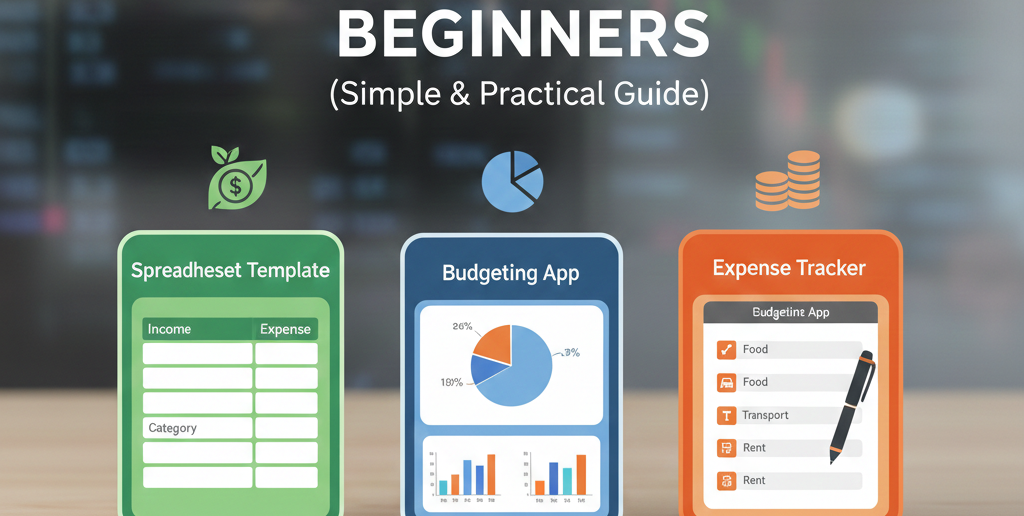
Types of Budgeting Tools Beginners Commonly Use
Simple Budgeting Apps
These tools categorize spending automatically and provide summaries. They work best when checked weekly or monthly.
Spreadsheet-Based Budgets
Spreadsheets offer flexibility and transparency, especially for beginners who want control without automation.
Envelope-Style Tools (Digital or Manual)
These tools help manage variable spending but require discipline to maintain.
From practical situations, most beginners benefit from one simple system, not multiple methods.
Table — Budgeting Tools That Help vs Tools That Overwhelm
| Tool Type | Helps When | Hurts When |
| Budgeting app | Building awareness | Obsessive checking |
| Spreadsheet | Planning monthly goals | Overengineering formulas |
| Envelope method | Controlling variable spend | Income is inconsistent |
| Advanced dashboards | Later stages | Early confusion |
Real-World Scenario — Flexible vs Rigid Budgeting
Two beginners start budgeting:
Beginner A sets strict limits and checks daily
Beginner B reviews monthly spending trends
After six months, Beginner B sticks with the budget. Beginner A abandons it completely.
The difference wasn’t discipline—it was flexibility.
Common Beginner Mistakes With Budgeting Tools
Tracking Every Expense Perfectly
Fix: Track major categories, not every detail.
Treating Budgets as Punishment
Fix: Use budgets to guide choices, not restrict enjoyment.
Changing Tools Too Often
Fix: Stick with one tool long enough to see patterns.
[Money-Saving Recommendation]
Free budgeting tools are usually enough for beginners. Paid upgrades rarely add value early on.
Information Gain — Budgeting Is About Behavior, Not Numbers
Most SERP articles focus on features. What they miss is behavioral friction.
From experience, the best budgeting tool is the one you’ll actually use. A simple budget followed consistently beats a perfect budget abandoned quickly. Reducing friction increases follow-through.
This behavioral insight is rarely explained clearly.
Beginner Mistake Most People Make
Beginners often believe budgeting should eliminate all financial stress. In reality, budgeting reveals trade-offs, not removes them.
Seeing trade-offs clearly is progress—not failure.
How Beginners Should Use Budgeting Tools
A healthy approach:</strong
Review spending monthly
Adjust categories gradually
Focus on trends, not perfection
Link budgeting to savings and investing goals
(Natural transition: Beginners who budget effectively often connect budgeting tools with investment calculators and tracking tools to plan long-term goals confidently.)
FAQs
Q1: Do beginners really need budgeting tools?
Yes, to build awareness and consistency.
Q2: Are budgeting apps better than spreadsheets?
Both work—choose what feels simpler.
Q3: How often should I check my budget?
Monthly reviews are usually enough.
Q4: Is budgeting too restrictive for beginners?
Not if it’s flexible and realistic.
Q5: Can budgeting help with investing?
Yes. It creates space for consistent investing.
Conclusion
Budgeting tools are meant to support your financial journey—not control it. For beginners, the most effective tools are simple, flexible, and easy to maintain. By focusing on awareness rather than perfection, budgeting becomes a helpful guide instead of a source of stress. When budgeting feels manageable, it naturally supports saving, investing, and long-term confidence.
Internal Link
Financial Calculators for Beginners: How to Use Them Wisely
External Link
Budgeting
cfainstitute.org/sites/default/files/